About This Site
Over 50 years of research into the Stratton, Schneider, King, and allied families—from colonial Massachusetts to Indiana and beyond. Built by Bill & Karen Stratton.

 Strattons of Massachusetts Bay
Running Through the Sands of Time
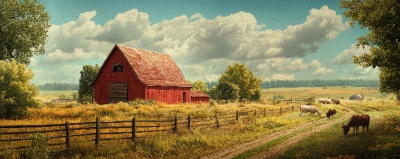
The Long Line: A Stratton Chronicle — Chapter One
England — 1100 to 1530
The earliest names in this line come to us through medieval documents and reconstructed pedigrees. Where the record is speculative, I have said so. Where it is probable, I have treated it as such. Only the last few generations in this section stand on solid ground.
The name itself is the oldest evidence.
Stratton is a place-name turned into a surname, the way the English have always done it. A man called himself “of Street-town” — de Stratton — because he came from a place where a Roman road ran through, where the old stone strata cut across the countryside and gave the settlement its name. There are Strattons all over England, villages in Wiltshire, Cornwall, and Gloucestershire, each one a place where a Roman road once mattered enough to name a town. The family in this chronicle most likely came from one of them, somewhere in the eastern counties, and sometime in the twelfth century they stopped calling themselves “of Street-town” and started calling themselves Stratton, the way surnames harden into inheritance.
The earliest record that touches this family is a document from approximately 1148, in the reign of King Stephen. It mentions a man called Robert, and his son Richard — Richard filius Roberti, Richard son of Robert — described as being “of Street-town.” They are not proven ancestors in the strict genealogical sense. They are names in a document, ghosts at the beginning of a very long line. But they are there, which is more than most families of that era can say.
King Stephen’s reign was called the Anarchy for good reason. Stephen and his cousin the Empress Matilda spent nineteen years tearing England apart over which of them deserved the throne, while the barons chose sides and changed them and the people tried to stay alive. Villages burned. Harvests failed. The Church complained loudly and was largely ignored. Robert and his son Richard — if they farmed, if they had a holding, if they raised children who would carry the name forward — did it while navigating all of this from somewhere in the eastern counties. They held on. The name survived them.
Between Richard and the next Stratton the record can see, there is a gap of roughly sixty years — two or three lost generations, silent because ordinary people in the twelfth and early thirteenth centuries left almost no trace in writing unless they owned enough to generate legal documents. England passed through Henry II, Richard the Lionheart, the loss of Normandy, and Magna Carta while the Stratton family left nothing that has survived. They were there. People do not vanish from the earth because they leave no documents. But we cannot yet name them.
The next name is Thomas Stratton, born around 1210, late in King John’s reign.
Thomas is speculative — placed in this pedigree by reconstruction rather than direct documentation, his connection to the later Stratton line probable but not yet proven from primary sources. What we can say is that a Stratton existed in this era, and that Thomas is the best working candidate. He would have lived through Henry III’s long contentious reign, through Simon de Montfort’s rebellion and the slow invention of Parliament, through the first codifications of English common law. He farmed, in all likelihood, the way his father and grandfather had farmed. He left someone behind him.
Again the record goes quiet. Another century of silence, or nearly — intermediate generations unaccounted for in any surviving source. Between Thomas and the next documented Stratton, there may have been two or three men whose names we do not know. England in those decades was convulsed by the disasters of Edward II’s reign and then pulled into the competent ambitions of Edward III, and through it all the family that would become the Strattons of Shrivenham was somewhere in the eastern counties, farming and living and dying without leaving documents that have reached us.
Then, around 1329, in the records of an eastern county — Suffolk — a Walter de Stratton appears.
Walter de Stratton of Suffolk is the first ancestor in this line who carries the locative surname in a formal legal context, which means his family had been known by that name long enough for it to be official. He was a man of Edward III’s early reign, which was considerably more stable than what had come before. He lived, in all probability, through the Black Death — which reached England in 1348 and killed somewhere between a third and half of the population in two years, sweeping through the eastern counties with particular ferocity. Suffolk lost a catastrophic share of its people in those years. If Walter was in Suffolk when the plague arrived, he watched it take his neighbors and perhaps his family. He kept the name alive regardless. He died around 1365, and he left a son.
That son — identified in pedigree reconstructions as Walter Stratton, the de dropped as the surname became fully hereditary — is the direct link to the first Stratton the record can point to with something approaching confidence. This Walter, dates uncertain, is named in reconstructed genealogies as the father of John Stratton, born around 1388, and it is with John that the shadows finally begin to lift.
John Stratton, born around 1388 and died around 1439, is where the chain firms up.
He was the son of Walter, and he married Elizabeth Luttrell — a name that carried weight in medieval England. The Luttrells were a family of standing in Norfolk and Suffolk, with the land and connections and status that the word gentry implied. For a Stratton to marry a Luttrell was a step up, the kind of marriage that a man earns when he has demonstrated enough substance to be considered worthy. Whatever Walter Stratton had built in the wreckage the Black Death left behind, it was enough for a Luttrell to say yes to his son.
John Stratton lived through Henry V, Agincourt, the English conquest of Normandy, and the beginning of Henry VI’s reign. He was a man of property documents and medieval legal records, and it is in those documents that his name appears most clearly. He left behind a son.
That son was George Stratton, born around 1450.
George is where the shadows lift entirely.
Born into the Wars of the Roses — the three-decade dynastic bloodbath between the houses of York and Lancaster that left England’s nobility half-destroyed — George Stratton is described in compiled genealogies as the man who solidified the family’s presence in Shrivenham, Berkshire. This is a long way from Suffolk, and suggests that somewhere between John and George the family moved westward into the Vale of White Horse. George acquired land. He established himself in the parish. He made the Stratton name mean something in Shrivenham through decades of rents paid, obligations met, and neighbors dealt with honestly. He died around 1498, thirteen years after Henry VII had ended the dynastic wars at Bosworth Field, and he left behind a son who had inherited something worth inheriting.
That son was John Stratton, Esquire.
The title matters. Esquire placed a man one rung below knighthood, among the minor gentry — men of substance and local standing who had the right to bear arms and were expected to carry themselves accordingly. John Stratton, Esquire, born around 1480, married Agnes Webb and lived in Shrivenham through the entire reign of Henry VIII — the most turbulent reign England had seen in living memory. Henry was eighteen when he came to the throne in 1509, and he spent the next thirty-eight years dissolving monasteries, executing ministers, breaking with Rome, marrying six women, and rewriting the religious settlement of England so many times that a man who went to church on Sunday and kept his opinions to himself still could not be certain by midweek that his opinions were the right ones to keep. John Stratton, Esquire, navigated all of it. He died around 1560, in the second year of Elizabeth’s reign, eighty years old and still in possession of his head and his land. That was no small achievement.
His son Thomas was the first Stratton the record calls yeoman rather than Esquire — a step down in formal rank, but a step into the solid English middle. A yeoman owned or held enough land to live on and to leave to his children. He appeared on the subsidy rolls, served on juries, and was reckoned a man of consequence in his parish even if he was no gentleman. Thomas Stratton married Joan Gonshall Mundy in 1529 — the very year Cardinal Wolsey fell from Henry VIII’s favor and the long unraveling of the old Church began. He raised his family in Shrivenham while the world reorganized itself around him. The Abbey at Faringdon, a few miles to the west, fell to the King’s commissioners in 1539 — monks pensioned off, buildings stripped for stone, centuries of charitable habit dissolved along with everything else. Thomas was thirty-two when it happened. He would have watched the commissioners ride through, and he would have known, with the farmer’s instinct for a changed landscape, that things were different now.
He survived it. He farmed his acres until he was old. He died around 1587, having outlasted Henry, Edward, Mary, and the first thirty years of Elizabeth, and he was buried in the Shrivenham churchyard where his father John had been buried before him.
And he left behind a son named William, born around 1530, who was fifty-seven years old when Thomas died and had been farming the Shrivenham land for thirty years already.
William Stratton was, at that point, the last of the line still standing. His son John was a grown man. And in the summer of 1588, the summer that would define the end of the century, the beacons on the Ridgeway came alive.
Shrivenham, Berkshire — July 1588
The fire appeared on the ridge after supper, when the sky was still pale in the west and the first stars had not quite decided to show.
William was in the yard when he saw it — a bright point on the Ridgeway above the village, too steady for lightning, too large for a shepherd’s fire. He watched it for perhaps half a minute, hands hanging at his sides. Then a second fire answered it from the east, and a third from the west, and he understood what he was looking at.
He went back inside.
“Joan,” he said.
She was at the table, mending something by candlelight. She looked up at his face and put the mending down.
“The beacons,” she said. It was not a question.
“Along the whole ridge. Moving east.”
She was quiet for a moment. Fifty-six years old, she had lived through Henry and Edward and Mary and the first thirty years of this queen, and she had learned, as English women of her generation all had, to read the face of a man who has seen something he does not know how to reckon with.
“John is in the south field,” she said.
“I know.”
He went to find his son.
John was twenty-six, broad through the shoulders like his father, with Alice Pigott’s face somewhere in the back of his mind in the way a young man carries the face of the woman he intends to marry. He had spent the day cutting and stacking and was sitting at the edge of the field in the warm evening air when William came across the meadow.
He saw the beacons before his father spoke.
“Spain,” John said.
“The Armada. Yes.” William stopped beside him. They stood together looking at the fires on the ridge. The nearest one was close enough that you could see the shape of it — a great orange flower blooming against the darkening sky.
“The muster will go out tomorrow,” John said.
“Tonight, more like.”
John looked at him. “You’re too old to march.”
William did not answer immediately. He was a yeoman of Shrivenham, which meant he had appeared on the subsidy rolls, served on juries, and been listed in the county muster as a man of military capacity since before John was born. He had never fought in a war. No one his age had fought in a war — not a real one, not on English soil. There had been the French campaigns and the Irish troubles and the skirmishes at sea, but Berkshire had been Berkshire, and the chalk downs had been the chalk downs, and the worst violence most men in Shrivenham had ever seen was a fight outside an alehouse in Faringdon.
“Who said anything about marching,” William said.
John looked at him steadily. “I know the face you’re making.”
“I’m not making any face.”
“You’re making the face you made when the drainage ditch flooded the lower field and you decided to fix it yourself instead of hiring it done.”
William almost said something. Then he didn’t.
In the west, another beacon came alive on a hill none of them had ever thought of as a signal point before that night. The chain was moving. Somewhere on the coast, men were looking at ships.
“I’ll go,” John said. “It’s my muster, not yours.”
“It’s both our musters.”
“Father.” John picked up his scythe and laid it over his shoulder with the ease of a man who has done it ten thousand times. “The farm needs keeping. Someone has to stay.”
“Someone does,” William agreed.
“And that someone,” John said, looking at him with an expression that was both respectful and entirely unyielding, “is going to be you.”
Faringdon, Berkshire — July 1588
They called up three hundred men from the surrounding parishes — Shrivenham, Watchfield, Bourton, Uffington, the villages strung along the spring line — and assembled them at Faringdon on a Thursday morning that smelled of horses and unwashed wool and the particular nervous energy of men who are not sure whether they are about to be heroes or dead.
John Stratton fell in with the Shrivenham contingent. He had brought his bill-hook, a knife, and a pair of boots he had cobbled himself the winter before. Most of the men were similarly equipped. A few had pikes. One man — Thomas Ewer, who farmed the south side of the ridge and had a prosperity that irritated his neighbors — had arrived with a horse and a breastplate, which he wore with the self-consciousness of a man who knows he is overdressed for the occasion.
The mustering officer read names. He was a younger son of someone’s manor house, very correct, with a sword he almost certainly knew how to use.
“Stratton,” he said.
“Here,” John said.
The officer looked up. Looked John over. Made a mark in his ledger. “Where’s your father?”
“Minding the farm.”
The officer nodded, satisfied, and moved on.
William had been at Faringdon too, standing at the edge of the market square with the other men who were too old or too encumbered to march. He watched John fall in. He watched the column form up and begin to move south on the Wantage road.
John turned once and lifted his hand.
William lifted his in answer.
Then the column rounded the bend at the edge of town and was gone.
Shrivenham, Berkshire — August 1588
Joan kept the farm.
She had been keeping farms, in one way or another, since she was fifteen years old — first her father’s, then her husband’s — and she understood, in the particular way of women who have managed households through several monarchs and a reformation and the general turbulence of the sixteenth century, that panic was a luxury. The crops did not care about the Armada. The animals did not care about the Armada. The drainage ditch that John had been meaning to clear before he left for the muster did not care about the Armada.
Joan cared about the drainage ditch.
She and William worked the farm in John’s absence the way they had worked it thirty years before, when they were young and the holding was new to them and there was no one but themselves to do anything. They were older and slower and it was harder than it had been, but it was familiar work, and familiar work was a kind of anchor when the world beyond the ridge was uncertain.
News came in fragments. The fleet had been sighted off Plymouth. Drake had finished his bowls, or he hadn’t — there were two versions of that story and neither was more believable than the other. The Queen was at Tilbury. The Queen had given a speech. The Armada had been met in the Channel and the fighting was fierce. The Armada had been scattered by fire ships in the night. The Spanish were retreating north.
Each piece arrived through the usual rural machinery — a drover passing through, a woman whose brother was in service at the manor house, a priest who had received a letter from someone who had received a letter from someone who knew something. The information was unreliable and arrived in no particular order. What you did with it depended on your temperament.
William’s temperament was to keep working until better information arrived.
Joan’s temperament was exactly the same.
By September, they knew: the Armada was broken, the Spanish were trying to limp home around the Scottish coast, and the storm that had finished them was being discussed in sermons across England as evidence of divine favor.
John came home in October, thinner and sunburned and with nothing dramatic to report. He had marched, camped, waited, stood a watch or two along the coast, and marched home again when the muster was released. He had not fired a shot. He had not seen a single Spaniard. He had eaten bad salt pork for six weeks and developed a low opinion of the man who supplied it.
“Well,” William said, when John came into the yard.
“Well,” John said.
Joan appeared in the doorway. She looked her son over from head to foot — checking for damage, the way a mother checks — and then nodded once, satisfied.
“There’s pottage,” she said. “Wash your hands.”
Shrivenham, Berkshire — 1589–1598
The years after the Armada were ordinary years, which was the best kind.
The farm ran. The harvest came and went. John did the heavy work and William did the work that required judgment and experience, and the arrangement suited both of them because it was true — John’s back was better than his father’s, and William’s fifty years of knowing the land were better than anything John could have learned in a decade. It was a working partnership, and it worked.
But John was thinking about Bedfordshire.
He did not say so directly at first. It came out sideways, the way a young man’s serious intentions always come out when he is not sure they will be well received. He mentioned a man in Podington. He mentioned that Alice Pigott’s family had connections there. He mentioned, carefully, that the land market in Hinwick was more favorable than anything available in Shrivenham, where the holdings had been divided and subdivided for generations until there was not much room for a new establishment.
William listened to all of this without comment. He had been farming long enough to know that a man who is listing reasons for something has already decided to do it and is working out how to explain it.
“Hinwick,” he said, one evening.
John looked up. “The land is good.”
“I know where it is.” William had been to Bedfordshire once, thirty years ago, on business he no longer clearly remembered. He recalled flat fields and heavy clay soil and a sky that seemed larger than the sky over the chalk downs. Different country. Good country, if you knew how to work it. “Alice Pigott’s father has land there?”
“Connections to land. It’s not settled yet.”
“Nothing’s settled.” William looked at his son across the table. “Until it is.”
John waited.
“It’s forty miles,” William said.
“About that.”
“You could be back in a day and a half if something went wrong.”
John was quiet for a moment. He understood what was being said. Not the distance. The other thing.
“I’d be back,” he said.
William nodded. He stood up from the table, the way he had stood up from tables for fifty years in this house, and went to the door to check the weather before bed.
“Talk to Alice’s father,” he said. “Find out what’s settled and what isn’t. Then we’ll see.”
Shrivenham and Hinwick — c. 1600
John married Alice Pigott and moved to Hinwick.
He was somewhere near forty when he went, Alice a few years younger, and they took with them the particular competence of people who have been trained by good farmers and understand the work. William had seen to that. Whatever else he had done or failed to do, he had made certain his son could read a field, manage a holding, deal honestly with his neighbors, and hand something solid to the next generation.
That was the yeoman’s obligation. That was what Thomas Stratton had done for William, and Thomas’s father before that, and so on back as far as the record reached — a long chain of farmers handing practical knowledge forward across the generations, each one making the next one slightly better equipped to survive.
John Stratton of Hinwick would prove it out. He would farm the Bedfordshire acres and raise four sons — Samuel, William, Robert, and Francis — and in the June of 1627, near the end of his life, he would dictate his will to a scrivener and distribute his world among them: money, livestock, the Bible, a pewter dish. The document survives. It is the key that unlocks this family’s connection to the Massachusetts Bay Colony, to the line that runs from Podington across the Atlantic to Watertown and from Watertown eventually west to Indiana.
But none of that had happened yet.
In the last years of Elizabeth’s reign, William Stratton was an old man in a farmyard in Berkshire. Joan was still alive. The farm was running. John had gone to Bedfordshire and was establishing himself well enough that the letters — what letters there were — said nothing alarming.
Elizabeth died in March of 1603. William survived her by about a year. He died around 1604, somewhere near Shrivenham, and was buried in the churchyard where his own parents lay — St. Andrew’s, its tower visible from a mile off across the flat fields, the church that had been Catholic when he was born and Protestant when he died and was the same stone building either way.
He had lived through five monarchs. He had watched the faith of his fathers revised three times. He had farmed through good harvests and bad ones, stood at Faringdon in the summer of 1588 and watched his son march off to a war that turned out to be mostly walking, and outlasted the queen herself.
He was a man who held his ground. His son proved it in Bedfordshire. His grandson proved it on an Atlantic crossing. His great-great-great-great-granddaughter proved it in a Cambridge courtroom, refusing to recant.
The quality came from somewhere. It came from a farmyard in Berkshire, at the foot of the chalk ridge, in the long reign of Elizabeth, where a yeoman named William Stratton worked his land and handed it forward.
William Stratton (c. 1530–1604), yeoman of Shrivenham, Berkshire, is the earliest well-documented ancestor of the Stratton line traced in this chronicle. His son John Stratton of Podington (c. 1562–1627) is the subject of Chapter Two: The Podington Will. The family’s genealogical record is at williamfs.online.
 —Wm. F. Stratton, May 2026
Over 50 years of research into the Stratton, Schneider, King, and allied families—from colonial Massachusetts to Indiana and beyond. Built by Bill & Karen Stratton.
If you are tracing a Stratton line, start here. Harriet Russell Stratton’s two-volume Book of Strattons is the most comprehensive Stratton genealogy ever compiled—both volumes are free and fully searchable online.