About This Site
Over 50 years of research into the Stratton, Schneider, King, and allied families—from colonial Massachusetts to Indiana and beyond. Built by Bill & Karen Stratton.

 Strattons of Massachusetts Bay
Running Through the Sands of Time

What Frank Nelson Stratton Wrote After Dark
by William F. Stratton
There is a photograph I do not have of a man I never knew.
In it, he would be sitting at a desk somewhere in Kokomo, Indiana, in the small hours of a weeknight in 1903 or 1904. The law practice is done for the day. The boys are asleep — Frank Arthur thirteen, Frederick seven or eight, Ferdinand five. His wife Otilie has gone to bed. The house on Fort Wayne Avenue is quiet. He pulls a fresh sheet of paper toward him, dips his pen, and writes.
By morning he will have another story.
His name was Frank Nelson Stratton. He was my father Frederick’s father, which makes him my grandfather, which puts him at a comfortable distance — comfortable, that is, for everyone but me. I have read his stories. I have read fifty of them, the ones that have survived, the ones that turned up in the archives of Munsey’s and Argosy and Everybody’s and Collier’s, the ones we have pieced back together over the years from original magazine pages and photocopies and digital scans. And having read them, I find the distance has collapsed entirely. He is not comfortable at all. He is right here.
To understand what Frank Stratton wrote, you have to understand the house he grew up in — not the physical house, though that too, but the emotional architecture of it. It was a house built on absence, and he was an architect of the first order.
His father was Francis Joel Stratton: physician, constable, sometime spy for Secretary Seward’s intelligence network during the Civil War, captor of the Stephen Wing counterfeit gang, an extraordinary and restless man who managed to pack three careers, two wars, and a secret life into the forty-some years he had. Joel Stratton died in Washington, D.C. in 1863. Frank was two years old. He grew up, as so many men of his generation grew up, in the long shadow of a father he never knew, the shadow being in some ways larger than the man could have been.
His mother Hester Donnellan Stratton was made of different material — steadier, perhaps, but not untouched by grief. She had buried a husband in the capital during wartime, gathered her two small children — Frank and his baby sister Susie, born in Washington the same year Joel died — and come home to Indiana. By 1867 she had married again, a man named Samuel Edgerton Stratton (no close relation, despite the name), a self-taught millwright from Howard County who would go on to build mills across the county, serve as County Commissioner, superintend the construction of the Kokomo courthouse, and spend thirty consecutive years as a committed Spiritualist. He was, in short, another extraordinary man. Frank Stratton seems to have had a gift for them in his family tree, though they kept dying on him.
The household Frank grew up in, as recorded in the 1870 census, contained five people: Samuel, forty; Hester, thirty-nine; Mattie, sixteen — Samuel’s daughter from his first marriage, brought into the new household; Frank himself, nine; and Susie, seven, born in the District of Columbia, attending school.
Within a few years of that census, the house would lose three of those five. An unnamed infant — Samuel and Hester’s child — was born and died in 1871, leaving no record beyond a brief note in the family papers. Mattie, Samuel’s daughter, died before 1883, the year a county biography of Samuel referred to “two children, both deceased.” Susie — Frank’s little sister, his only full sibling, the only other person in the world who shared both his parents — died sometime between 1870 and 1880, before she was grown, leaving no grave marker anyone has found and no cause of death in any record that has survived.
Frank was somewhere between nine and nineteen years old when he lost her. Old enough to know her. Old enough to grieve.
He never wrote about Susie directly. He was not that kind of writer — the confessional mode was not available to men of his time and place in quite the way it is to us. But you read his stories, and you notice something: he comes back again and again to the figure of the powerless person — the woman pleading for her son’s life, the old father watching his farm be taken, the boy whose mother cannot write her own name but whose love is a force that stops a courtroom cold — and you understand that this is a man who knew early what it meant to lose someone you could not protect, in a house where the obituaries came too fast and too young.
He had, by his own account and the accounts of those who knew him, almost no formal education. A short spell at a school in New London. Six months in a business college. The rest he did himself, by lamplight, with whatever books he could find.
For most of the 1880s he worked — in the sawmill, in the clearing, on the farm, the work available to a young man in Howard County, Indiana who had no degree and no particular prospects. He married in 1881, a young woman named Sarah C. Dunn from Knox County, Tennessee, and they had a son, Harry Percy, born in March of 1882 in Marion, Indiana.
And then Sarah disappears from the record. There is no divorce filing I can find, no death notice, no forwarding address. She was twenty years old and then she was gone, and Frank was left with a son he was raising somehow in the years before he became a lawyer or a writer or anything at all. What happened to Sarah Dunn — whether she left, whether something happened to her, whether there was a dissolution of some kind that has slipped below the documentary waterline — I do not know. It is one of the family’s genuinely open wounds, a question mark at the start of the story.
By 1888 he had married again — Otilie Schellschmidt, daughter of a distinguished Indianapolis musical family, a woman of evident intelligence and patience, because it takes patience to be married to a man who is studying law by night while working by day and already had a son by a woman no one talks about anymore. Three more sons followed: Frank Arthur in 1890, Frederick in 1896, Ferdinand in 1898.
In 1892 he began the serious study of law. In August of 1894 he was admitted to the Indiana bar.
His mother died that same month. September 18, 1894 — his thirty-fourth birthday.
He was a lawyer now. He was also an orphan, with a wife and children and a household that depended on him, and a name in the county that he had built entirely out of midnight oil and stubbornness. The Kokomo newspaper of 1898 would put it this way: he had “fought his way from the sawmill, the clearing, and the farm to the front rank at our bar.” That was true. The newspaper did not mention what it cost.
It was sometime around 1901 or 1902 that he started writing fiction. We don’t know exactly when or why. Maybe it was the long habit of reading, finally demanding an outlet. Maybe it was a lawyer’s understanding that every case is a story and he had grown tired of only telling other people’s. Maybe it was simpler than that — maybe someone dared him, or maybe he read something and thought: I can do this.
What we know is that by 1902 the stories were coming, and they were good. Not tentatively good, not almost-good — genuinely, professionally good, good enough for the best mass-market magazines in America.
He published under two names. As “Frank N. Stratton” in the legal notices and the county papers; as “Frank Neilson” in the stories. Whether the pen name was modesty or strategy — keeping the lawyer and the writer from contaminating each other — is not recorded. In practice, the distinction faded quickly. By 1903 he was publishing under his real name in Everybody’s Magazine and Collier’s Weekly, which required no disguise at all.
The early stories have a particular music. They are brisk, witty, conspicuously literary — a man showing off his self-education with words like sine qua non and ennui and chic and aplomb, dropped into the narrative the way a new attorney drops Latin into his arguments, because he has earned the right. The jokes are quick and the reversals are clean. Rider’s Revenge (1902) is pure social comedy — a banking president, a fraudulent “Philippine pointer” dog, and a practical joke that bounces back on the prankster with satisfying precision. The Pottering Pete series — six linked stories about a cheerful Western drifter — is picaresque comedy, gentle and broad, Pete wandering from one comic predicament to the next in a frontier that is already becoming mythological.
These are the stories of a man who is pleased with himself for being able to write them, and reasonably. But they are not yet the stories he is capable of.
In 1902 and 1903, the magazines where Frank Stratton was publishing were the most widely read in America. Munsey’s Magazine had a circulation of half a million — the largest in the country. Argosy and Everybody’s were not far behind. When Frank’s story “The Man and the Horse” appeared in The Argosy in August of 1902, it appeared in the same periodical that had published Jack London the year before.
London was thirty-four years old in 1903 — the same age as Frank — and The Call of the Wild made him famous that summer, serialized in the Saturday Evening Post and then published as a book that sold ten thousand copies in its first day. He was self-taught, as Frank was. He had lived a physical life before he wrote — oyster pirate, gold rush prospector, hobo — as Frank had worked the sawmill and the clearing before he found the law. He wrote of dogs and wilderness and men tested to their limits, and he wrote it in a prose that was stripped and direct and hit like a fist. He was the most famous writer in America.
Frank Stratton published in the same magazines, at the same time, and never achieved that kind of fame. This is partly accident and partly geography and partly the stories he chose to tell — not adventure-wilderness but human comedy and Midwestern legal drama, which sold well but did not generate myths. He had a scholar’s analysis, not a daredevil’s biography. But the Yukon was in the air, and Frank was breathing it.
In April of 1905 — the last year of his life, the stories coming out of him now at a remarkable pace, as if he sensed the clock — he published “Yukon Dan” in The Popular Magazine. It is set in Dawson City, in the Gold Rush of 1898, and it is the most London-esque thing he ever wrote, and also the most Frank Stratton: a skinny young con man from Nebraska who wanders into Soapy Jim McGrath’s crooked gambling house with brass filings mixed into his gold dust and a dog named Barney who can apparently count cards. The story is narrated in the vernacular of an “old sourdough” in a saloon, and it moves like a card trick, and at its center is a husky who is loyal and clever and instrumental in a way that London would have recognized — except that London’s dogs were tragic and Frank’s dog gets to walk out of the story on four legs with his man, heading north toward Skagway and whatever comes next.
Did Frank Stratton ever meet Jack London? Almost certainly not. London was in California and then the world; Frank was in Kokomo. But they were reading the same magazines and writing for the same editors and imagining the same frozen north from their respective desks. And in the months before Frank died, he was submitting a story called “Where the Grey Wolf Fell” to All-Story Magazine — the proto-pulp adventure house that would later publish Edgar Rice Burroughs and the first science fiction writers — that suggests he was moving toward London’s territory, the wilderness, the grey wolf country, the far edge. We do not have the text of that story. It appeared in October of 1905, eight months after Frank’s funeral. We have only the title, and the knowledge that he was still reaching.
In November of 1903, The Nickell Magazine published a story called “The Little Brown Man.” The byline was “Frank Stratton” — no middle initial, no pen name, his name plain on the page.
The story is set in the Philippines during the American occupation, and it begins like this: a band of blue-shirted American troopers has a native boy — a small Igorot child named Juan — living with the captain’s wife at the garrison. The boy was brought back from the mountains, a curiosity or a kindness, depending on your perspective. His father has been looking for him for a year.
The story follows the father. He is an Igorot warrior, a man of the mountain people of Luzon who resisted first the Spanish and then the Americans, a man who in any other story of this period would be the antagonist or the savage. Frank Stratton makes him the hero. He tracks his son across the length of Luzon to Manila — hundreds of miles on foot, living off the jungle, evading the soldiers, surviving on hatred and paternal love, which in this story turn out to be the same thing. He finds the garrison. He watches. He waits.
And then the story turns. An ambush is coming — not from the father, but from other men, men who have their own reasons for wanting the captain dead. The father sees it. He has spent a year wanting this man dead, and now, at the moment of the ambush, he does the only thing he can: he warns the captain. He dies in the warning. His last act is to place his son’s small hand in the captain’s.
The story is the most morally serious thing Frank Stratton ever wrote. It is sympathetic to the occupied people in a way that virtually no American popular fiction of 1903 was. It refuses to make the American soldiers evil — they are not evil, they are just there, as occupying soldiers are just there — but it places the full weight of the reader’s sympathy with the man they have dispossessed. It is a story about a father who cannot reach his child, and who dies trying.
Harry Percy Stratton had been gone since 1898.
He had enlisted at sixteen — or said he was sixteen; the documents are ambiguous about his age — when the fever of the Spanish-American War swept through Indiana that spring, and he had shipped out before anyone thought too carefully about it. By 1900 he was enumerated in the census at Villasis, Pangasinan Province, Philippine Islands, living among the military forces occupying a country that had expected liberation and received something else. He was eighteen or nineteen. He was blue-shirted. He was a long way from Kokomo.
Frank wrote “The Little Brown Man” in 1903, five years after Harry left. He wrote it in the voice of an Igorot father who would walk across an island to put his hand on his son. He gave that father the only reunion available — a deathbed one, a son’s hand placed in another man’s keeping, a transfer of custody that was the closest thing to going home that the story allowed.
Harry Percy Stratton never came home to Frank. Frank died in February of 1905, when Harry was twenty-two or twenty-three and still on the far side of the Pacific. Whether they corresponded in those years — whether letters went back and forth between Kokomo and Pangasinan Province — I do not know. Harry never spoke of the Philippines. Not to anyone, as far as any record shows. He settled eventually in Seattle, worked, lived quietly, died in 1957 of the kind of lung cancer that comes from things you breathed a long time ago, and left no account of what he had seen or done in those years when he was young and blue-shirted and a long way from home.
The story Frank wrote is the only reunion they had. It is not nothing.
A lawyer reads cases for a living. He reads — if he is any good — for the human structure underneath the legal question: who had power, who didn’t, what they did about it, what it cost.
Frank Stratton brought this reading habit to his fiction, and once you see it you cannot unsee it. He came back to the same situation over and over: a person with no standing before a person or institution with all the standing, and the question of whether plain human force — love, honesty, sheer persistence — can move something that has no legal obligation to move.
“The Governor’s Visitor” (1903): A woman comes to the governor’s office to plead for her son’s life. She has no lawyer, no political connection, no standing whatsoever. She has only her case and her grief. The governor, a man who has made a career of not being moved, is moved. That’s the whole story, and it is enough.
“Jimmy’s Mother” (1904) — published in Everybody’s Magazine, which was then one of the most widely read publications in the country — is the furthest Frank ever went in this direction. A man is on trial. The evidence is thin but the verdict looks certain. A juror sits in the box and watches the defendant’s mother, an old woman from the Appalachian backcountry who cannot write her name, who has come to the courtroom not because she understands courts but because her son is there, and the juror sees in her face his own mother, dead these many years, and quietly changes his vote. The lawyer who notices what happened asks him afterward. The juror says: It wasn’t me. It was his mother.
It is the best sentence Frank Stratton ever wrote. It is also a sentence that a man writes who grew up in a house where a mother was the fixed point, the thing that did not leave when the fathers died and the children died and the first wife vanished, the thing that stayed.
His mother Hester died on his birthday, September 18, 1894, the day he turned thirty-four. He had just passed the bar. She did not outlive the sawmill years long enough to see what he made of himself in the years after, which is the particular cruelty of that timing. But she is in the work. She is in every story he wrote about a woman of no standing who turns out to be the most powerful person in the room.
In July of 1905, Collier’s Weekly published a story Frank had written before he died, called “The Atavism of Abimelech.” It is set in a small town in a place that is clearly Indiana, in a time that is clearly the recent past, and it turns on this situation: a Quaker patriarch named Abimelech stands between a lynch mob and a man in a jail cell, and the question the story asks is whether a man of absolute principle can bring himself to use force to protect a principle.
Abimelech stands his ground. The mob comes. What happens — I will not spoil it entirely — involves the nature of inheritance and what we carry from our fathers even when we have rejected everything they stood for.
Frank Stratton’s father was a man who had used force in the service of law his entire career — constable, deputy, secret service operative, captor of counterfeiters. Frank became a lawyer. Whether he saw himself as his father’s successor or his father’s correction, this story suggests he had been thinking about it for years.
The stepfather who raised him — Samuel Edgerton Stratton, the millwright who spoke to spirits — belonged to the Quaker tradition too, having been raised in it and expelled from it when he married outside the faith. Abimelech’s predicament is not drawn from life in any direct way, but the Quaker inheritance, the expelled believer, the question of what remains when the formal religion is gone — these are the shapes of Frank’s own household, translated into fiction.
He was doing what writers do. He was using the stories to think through the things that could not be thought through any other way.
He died on February 15, 1905. He was forty-four years old.
The cause was pneumonia, four days’ worth, complicated by heart failure. It was winter in Kokomo. He had three sons at home, the oldest fourteen, and a wife who would outlive him by a significant margin and who had presumably watched him burn the midnight oil for several years now and had perhaps, in those last weeks, wished he had spent less time writing and more time sleeping, though we cannot know.
The Kokomo Tribune noted that eight hundred men walked in his funeral procession, which is a remarkable number for a city of twelve thousand, and suggests something about the kind of man he had been in the community — the self-made lawyer, the fraternal man (Red Men, Odd Fellows, Woodmen of the World, Pathfinders, Ben Hur — he was a joiner, which is what men of his era did instead of therapy), the prosecutor who went after the slot machines and pool rooms with an evident personal conviction. Eight hundred men. That is not a man anyone was indifferent to.
The stories kept coming out after he was gone. Munsey’s in May: “The Courting of Molly McCrea.” Collier’s in July: “The Atavism of Abimelech.” All-Story in October: “Where the Grey Wolf Fell.” He had a year’s worth of stories in the pipeline, and they emerged into a world he could no longer read them in, which is a peculiar kind of posthumous literary career — not famous enough to be collected in a book, but prolific enough that the magazines were still running him when the ground had closed over him for eight months.
His son Frederick — my father, the boy who was nine years old when Frank died — grew up to become a wireless radio operator in the First World War, carrying signals across France. Then, to pay his way through dental school at Indiana University, he spent his summers on oil tankers and mailboats. Frank had imagined the sea from his desk in Kokomo; Frederick went out and worked it. He came home from all of it, hung out his shingle in Ligonier, Indiana, and practiced dentistry until he died. His son Ferdinand became a Navy radio operator in the same war as Frederick, riding destroyers through the North Atlantic. His oldest son Harry Percy never came back from the Pacific — not physically; he made it back, he lived until 1957 — but he left something on that island and kept the silence about it his whole life.
Frank Stratton left his sons a handful of things: the habit of the self-made man, which took, in each of them; the skills of the radio operator, which two of them turned into military careers; and fifty stories in the archives of the mass-market magazines of 1902 to 1905, which no one collected and which might have disappeared entirely if someone had not gone looking.
We went looking. That’s what this site is for.
Ninety-one years after Frank died, a scholar named Robert Ohmann was writing a book about the mass-market magazine revolution of the 1890s and 1900s — what those magazines sold to their readers, what values they encoded in the fiction, what kind of person they imagined on the other end of the transaction. The book was called Selling Culture, and it was published by Verso Press in 1996, and it cited Frank Nelson Stratton’s stories as representative examples of the professional-managerial class values the magazines were constructing.
The citation is real, and it is remarkable. Frank Stratton was never famous. He published in the right places but died before he could do anything with whatever reputation he was building. His name does not appear in any anthology of Indiana literature, any history of the American short story, any guide to the fiction of his era. He is not in the indexes. He had no biographer and no literary executor and no devoted disciples.
He had Ohmann, ninety-one years later, pulling his stories out of the bound volumes of Munsey’s and finding in them something worth saying. And he has us, going through the archives, piecing back together the stories he wrote in Kokomo after the boys went to sleep and Otilie went to bed and the house on Fort Wayne Avenue went quiet.
Fifty stories. That is what the midnight oil produced. Fifty stories in three years, written between a law practice and a family and a county that needed prosecuting, written in the small hours, written in the language of a man who taught himself everything he knew and wanted to show it, and then, once he had showed it, let it go and wrote what he actually had to say.
The Little Brown Man. Jimmy’s Mother. The Governor’s Visitor. Yukon Dan. The Atavism of Abimelech.
They are all in the anthology. Read them. He worked hard enough.
Frank Nelson Stratton’s father Joel died in Washington, D.C. in 1863. Frank was two years old.
Frank Nelson Stratton died in Kokomo, Indiana in 1905. His son Frederick — my father — was nine years old.
Frederick Nelson Stratton died in 1941. I was three years old.
I have thought about this pattern for a long time and I still do not have a word for it. It is not tragedy exactly — tragedy implies an arc, a fall from something, a cause. This is quieter and stranger than that. It is a shape that keeps recurring in the line, a father leaving early and a son being left to make himself, generation after generation, without quite knowing what he was supposed to be making himself into or what the man who left might have told him if he had stayed.
Joel made himself into a physician and a spy and died at his desk in Washington with the war not yet over.
Frank made himself into a lawyer and a writer and died in February in Kokomo with the stories still coming out of him.
My father Frederick made himself into a radio operator, a sailor on oil tankers and mailboats, a dentist, and a father, and died in Ligonier when I was too young to ask him anything at all.
I found Frank’s stories in the archives. I cannot ask him what he meant by them, so I have read them until I think I know. That is what this site is, finally — not a collection of facts about dead people, but a grandson’s long conversation with a grandfather he never met, conducted through fifty stories in the bound volumes of old magazines, through a little brown man on an island, through the midnight oil, through the eerie and recurring shape of fathers who go too soon and sons who have to figure it out alone.
We did figure it out. All of us, so far, have figured it out.
I think he would have found that worth a story.
The full text of Frank Nelson Stratton’s recovered stories is available in the Frank Nelson Stratton Story Anthology. Scans of original magazine pages are in Original Magazine Pages. His biography — the life behind the stories — is in From Sawdust to Short Stories.
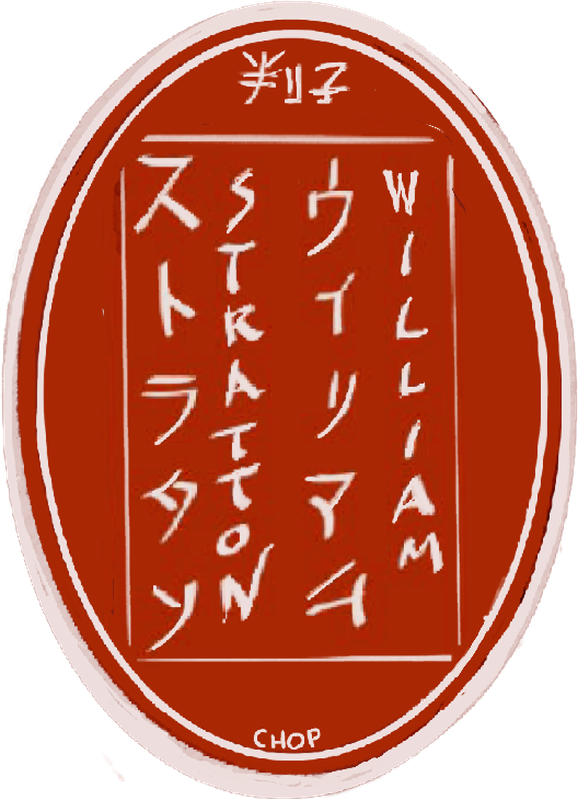 —Wm. F. Stratton, April 2026
Over 50 years of research into the Stratton, Schneider, King, and allied families—from colonial Massachusetts to Indiana and beyond. Built by Bill & Karen Stratton.
If you are tracing a Stratton line, start here. Harriet Russell Stratton's two-volume Book of Strattons is the most comprehensive Stratton genealogy ever compiled—both volumes are free and fully searchable online.